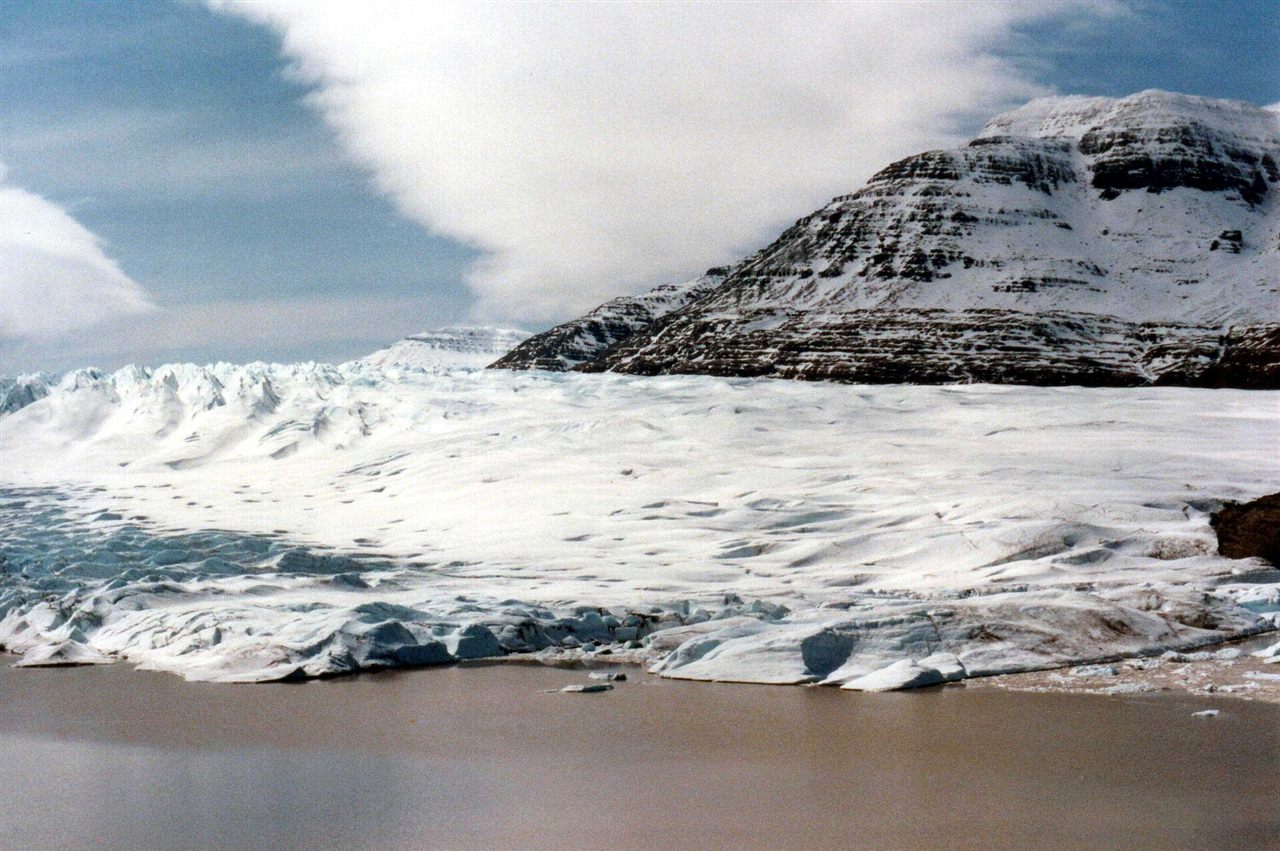
The Vanishing Arctic
The planet’s air conditioner is failing.
The Arctic is warming nearly four times faster than the global average - a phenomenon called Arctic amplification. As bright sea ice gives way to dark open ocean, more sunlight is absorbed, accelerating the melt in a self-reinforcing feedback loop.
Sea-ice loss per decade
−12.2%
September minimum, since 1979
≈4×
Warming rate
vs. global average
~95%
Oldest ice lost
multi-year ice since 1985
by ~2050
Ice-free summers
projected, high-emissions path
0.6 → 0.07
Albedo flip
ice vs. open ocean reflectivity
September sea-ice extent
million km²What's happening
- ▸Polar bears and walrus lose the ice platforms they hunt and rest on.
- ▸Thawing permafrost releases methane and CO₂ stored for millennia.
- ▸A weaker temperature gradient may be slowing and warping the jet stream, fuelling extreme weather far to the south.
What helps
- Every tenth of a degree of avoided warming preserves more summer ice.
- Cutting short-lived pollutants like black carbon slows local melt quickly.
- Protecting Arctic waters from new fossil extraction and shipping soot.
How it unfolded
- 1979
Satellite record of Arctic sea ice begins.
- 2007
A then-record summer minimum stuns scientists.
- 2012
All-time record low: 3.39 million km².
- 2020
Second-lowest minimum; late freeze-up in the Laptev Sea.
- 2023
Winter maximum among the lowest ever observed.
Next frontline
The Bleaching Reef